

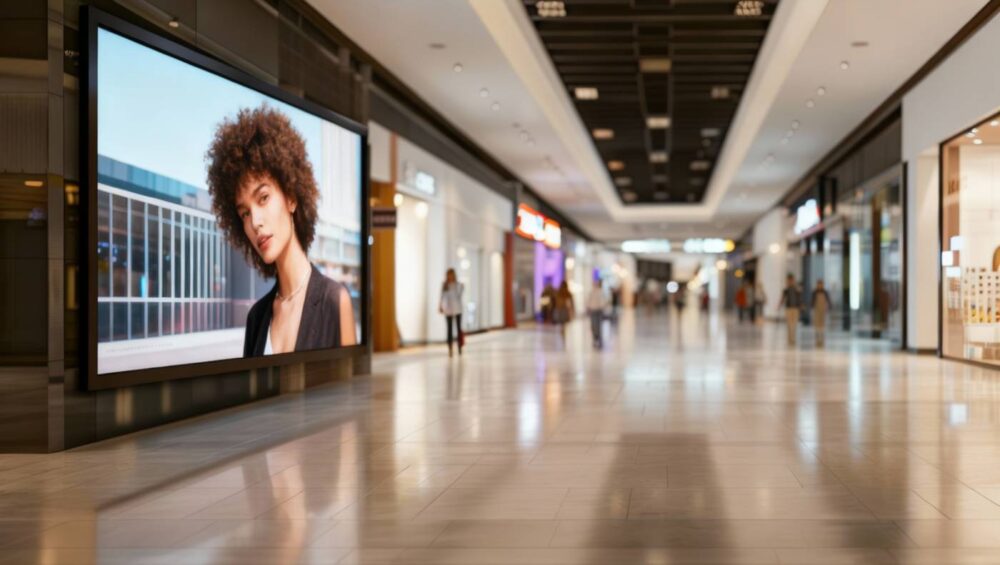
Imagine walking down a busy city street. Instead of blocking the skyline with heavy concrete and opaque billboards, the buildings themselves seem to come alive with information. Glass facades display real-time transit updates, weather alerts, and vibrant art, all while maintaining perfect visibility from the inside out. This isn’t a scene from a sci-fi film; it is the reality of modern urban planning. As cities become “smarter”, the demand for technology that integrates seamlessly with architecture is skyrocketing. leading the charge in this visual transformation is the transparent led display, a technology that allows clarity to meet innovation without compromising the view.
What Are Transparent LED Displays?
At its core, a transparent LED display is a screen that shows digital content while allowing light to pass through the spaces between pixels. Unlike traditional LED walls, which are solid and block visibility, transparent screens use a grid-like structure of LED strips.
This unique engineering results in displays that can achieve up to 70% transparency. When the screen is active, the viewer sees bright, crisp visuals. When it is off, or when displaying black content, the screen becomes nearly invisible, looking just like a standard glass window.
Manufacturers like HELOLED have refined this technology for specific environments. For instance, indoor models (like the P2.97) offer ultra-thin designs perfect for retail, while outdoor variations (P10-20) are engineered with high brightness—up to 6,000 cd/m²—to remain visible even in direct sunlight.
Benefits of Transparent LED Displays in Smart Cities
Smart cities rely on data and connectivity to improve the quality of life for citizens. Transparent LED displays serve as the perfect interface for this data, offering several distinct advantages over traditional signage.
Enhanced Aesthetics
One of the biggest criticisms of digital signage is visual clutter. Traditional black screens can ruin the architectural integrity of a building. Transparent LEDs, however, blend technology with the urban landscape. They allow architects to turn glass facades into dynamic media walls without sacrificing natural light for the people inside the building.
Improved Information Dissemination
In a smart city, real-time communication is vital. These displays can be updated instantly to show public service announcements, traffic conditions, or pollution levels. Because they can be installed on glass surfaces that already exist—like bus shelters or skyscraper windows—they turn passive infrastructure into active communication channels.
Energy Efficiency
Sustainability is a pillar of the smart city ethos. Transparent LED screens are surprisingly energy-efficient. Because the black parts of the image are actually transparent (meaning the LEDs are off), they consume significantly less power than a standard backlit LCD or traditional LED wall. For example, some models average a power consumption of just 270 w/m², making them a greener choice for large-scale installations.
Versatility
From high-end retail stores to public transport hubs, the applications are endless. The modular nature of these screens means they can be customized to fit cylinders, curves, and expansive glass walls, breaking the limitations of the standard rectangular frame.
Applications of Transparent LED Displays in Smart Cities
Retail and Advertising
Retailers are often the early adopters of display tech. In competitive shopping districts, storefronts need to grab attention without blocking the view of the merchandise inside. A transparent screen can overlay digital prices or promotional videos onto the physical products sitting in the window display, creating an augmented reality experience for passersby.
Transportation
Commuting is a major pain point in urban living. Transparent displays integrated into subway station barriers or bus windows can provide route maps and arrival times without obstructing the line of sight, keeping commuter flow smooth and safe.
Architecture and Facades
Perhaps the most visually stunning application is the media facade. Entire skyscrapers can be turned into digital canvases. In cities like Kuala Lumpur, building facades are increasingly used to display cultural art or celebrate national events. Because these outdoor screens are weatherproof (often rated IP65), they can withstand tropical rain and humidity while lighting up the skyline.
Public Safety
During emergencies, every second counts. Smart cities can override commercial content on these displays to broadcast urgent alerts, evacuation routes, or missing person notifications, ensuring high visibility across the city instantly.
Case Studies: Successful Implementations
While specific data from every project is proprietary, we can look at how these displays are transforming hubs across Malaysia and beyond.
The Retail Experience in Kuala Lumpur
Major shopping destinations, such as Pavilion KL and Suria KLCC, are prime examples of environments benefiting from this tech. By utilizing indoor transparent screens with fine pixel pitches (like 2.97mm), luxury brands can run high-definition campaigns that feel holographic. The result is a storefront that invites customers in rather than walling them off.
Corporate Lobbies and Showrooms
Corporate hubs are utilizing these displays to modernize their lobbies. Instead of static posters, companies are installing large-scale transparent walls to showcase brand history or stock market trends. The high refresh rates (up to 3,840 Hz) ensure that the visuals are flicker-free and fluid, matching the professional atmosphere of high-stakes business environments.
Challenges and Considerations
Despite their benefits, integrating these displays into a city isn’t without hurdles.
Cost
The initial investment for transparent LED technology is generally higher than traditional signage. However, when factoring in the durability—some LEDs have a lifespan of over 100,000 hours—and the energy savings, the long-term ROI often justifies the upfront cost.
Regulatory Compliance
Outdoor advertising faces strict regulations regarding brightness and distraction, especially near roads. Smart sensors can now adjust screen brightness based on ambient light, ensuring displays are effective during the day but not blindingly bright at night.
Environmental Factors
Electronics and weather rarely mix well. In tropical climates, humidity and heat are constant threats. It is crucial to select screens specifically designed for local conditions. HELOLED, for instance, emphasizes locally optimized designs that are robust against humidity and heat, backed by local technical support to ensure longevity.
The Future of Transparent LED Displays in Smart Cities
We are only scratching the surface of what is possible. As technology advances, we can expect to see transparent displays integrated with AI and cameras to offer interactive experiences. Imagine a shop window that recommends products based on your outfit, or a bus stop that displays a personalized route map when you look at it.
Furthermore, as the pixel pitch becomes even tighter, the resolution will improve to the point where these screens could replace standard glass entirely in certain architectural elements, making every window a potential smart interface.
Creating Connected Cities
Transparent LED displays are more than just fancy billboards; they are a fundamental component of the smart city aesthetic and infrastructure. They solve the paradox of needing more information while wanting less visual clutter.
By enhancing aesthetics, saving energy, and providing versatile solutions for communication, these displays are helping to build cities that are not only more connected but also more beautiful. Whether it is a weatherproof display on a high-rise or a sleek screen in a corporate lobby, the future of urban living is clearly—and transparently—bright.